
Newsroom
Gold Holds $4,000 as Central Banks Buy and Silver Retail Demand Collapses
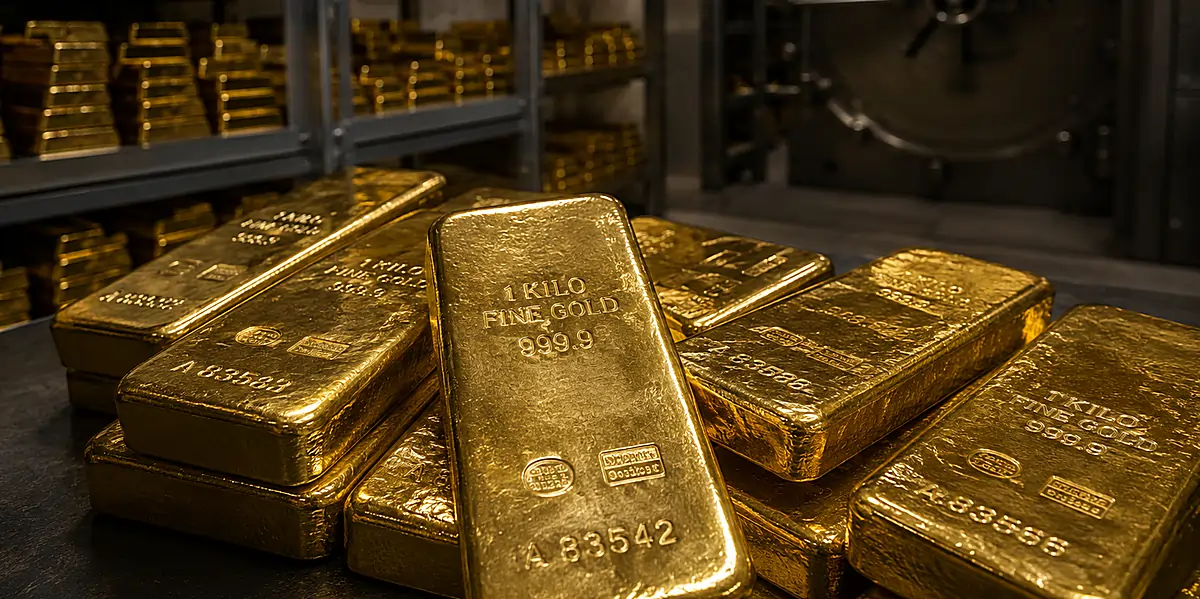
Something unusual happened when U.S.-Iran tensions flared back to life in July 2026: gold fell. Spot gold dropped 3% on July 13 to $3,996.76 per ounce, briefly breaking below the psychologically significant $4,000 level, while silver slid to around $58. The reason wasn't a rejection of gold's safe-haven status — it was oil. Brent crude jumped to $83.30 as renewed attacks on commercial vessels in the Persian Gulf raised fears of a prolonged Strait of Hormuz disruption. Higher oil means higher inflation expectations, which means traders price in tighter monetary policy, a stronger dollar, and rising bond yields — all of which press on non-yielding metals. The market partially reversed the next day after softer U.S. inflation data came in, with Comex gold recovering to $4,061.10, but the two-day whipsaw illustrated the bind bullion traders are in: geopolitical risk and inflation risk are now pulling gold in opposite directions simultaneously, according to reporting by CoinWeek.
While traders argue over the next Fed move, sovereign buyers are doing something quieter and more consequential. Central banks purchased a net 41 metric tonnes of gold in May alone. Poland led with 18 tonnes, pushing its total reserves to 614 tonnes and moving it closer to its publicly stated 700-tonne target. China added 10 tonnes, Uzbekistan nine, and Kazakhstan seven. The People's Bank of China then accelerated in June, adding roughly 15 tonnes — its largest single-month purchase since October 2023 — extending a buying streak to 20 consecutive months and lifting China's reported holdings to approximately 2,346 tonnes. A World Gold Council survey of central banks found that 89% of participating institutions expect global official gold reserves to grow over the next 12 months, with a record 45% planning to increase their own holdings. These are not momentum traders chasing a chart. Central banks buy gold to hold an asset that carries no other government's credit risk — a calculation that becomes more urgent during sanctions regimes, armed conflicts, and currency disputes.
The silver market is telling a starkly different story. The Perth Mint — one of the world's largest and most closely watched bullion mints — sold just 293,732 ounces of silver bars and coins in June 2026. That figure represents a 19% drop from May and a 37% collapse from June 2025, as reported by CoinWeek. For context: the same mint moved more than 1.72 million ounces in January and nearly 1.93 million ounces in February. Silver's price fell roughly 22% during June alone, from around $75 to $58.50 per ounce, according to Heraeus analysts. Under normal conditions, a price drop of that magnitude attracts bargain hunters. This time, retail buyers largely stayed home. Gold bar and coin sales at the same mint, by contrast, rose 53% from May to 29,730 ounces — a divergence that is difficult to ignore.
Several factors explain the retail silver retreat. Silver ran to record highs earlier in 2026, meaning many buyers still perceive $58-$60 as expensive despite the correction. Silver also carries heavier industrial exposure than gold — concerns about manufacturing output, technology capital spending, and global growth weaken its investment case in ways that don't apply to gold. And volatility itself can be paralyzing: a sharp drop looks like opportunity, but a continuing decline teaches buyers to wait for a lower floor. None of this means silver demand has permanently vanished. The Perth Mint's figures cover minted retail products and do not capture exchange-traded products, wholesale bar transactions, industrial consumption, or other mints globally. But the numbers confirm that one significant segment of the retail market has pulled back hard, and lower prices alone have not been enough to bring it back.
On the supply side, a longer-term story is quietly developing. South32 and KGHM have approved a major expansion at the Sierra Gorda copper and molybdenum mine in Chile — KGHM holds 55%, South32 45% — that will add a fourth grinding line and expand crushing and flotation capacity, lifting annual processing from roughly 48 million tonnes to 60 million tonnes. At full production, expected around 2031, Sierra Gorda projects average annual payable silver output of approximately 1.7 million ounces, alongside additional copper, molybdenum, and gold. KGHM already ranks among the world's largest silver producers, having output roughly 43.3 million troy ounces in 2025. The expansion won't move today's market, but it signals that producers with long time horizons are betting that elevated metal prices will persist. For now, the precious metals market has cleaved into two distinct camps: sovereign institutions treating gold as strategic reserve money, and retail investors treating silver as a trade they can revisit later. How long that split holds will likely determine the next major directional move in both metals.
Source: Profoundd