
State Quarter Errors Worth Real Money
The 50 State Quarters program (1999–2008) put more than 34 billion quarters into circulation, and the internet has spent two decades telling people the one in their junk drawer is worth thousands. Usually it isn't. But a handful of genuine mint errors from the series do sell for real money — and because we're coin buyers, not a clickbait site, we went and checked what they actually sell for: completed eBay sold listings, Heritage Auctions prices realized, and PCGS auction records. No asking prices, no estimates, no "worth up to" fantasy numbers.
Here's what the real market says, from the errors worth serious money down to the famous ones that are worth less than lunch.
The real-money tier
1. 1999 experimental-planchet quarters — $2,000–$7,200
In 1999 the Mint tested golden-colored experimental alloys (destined for the Sacagawea dollar) by striking a small number of Delaware, Pennsylvania, New Jersey, and Georgia quarters on them. These are the aristocrats of state quarter errors: only a handful of certified sales exist across the entire auction record. Verified results run from about $2,160 for PCGS MS64–65 examples up to $7,200 at the very top. Forum claims of "$10,000–$15,000 typical" aren't supported by a single verified sale. One hard warning: uncertified "experimental planchet" quarters are almost always misidentified or fake — toned and plated coins get sold as experimentals constantly. If yours looks golden and weighs wrong, it needs authentication before it's worth anything.
2. Missing clad layer — $250–$550 certified
A quarter is a copper sandwich: two cupronickel clad layers bonded to a copper core. When one clad layer separates before striking, the finished coin shows a raw copper face on one side — and weighs about 4.7 grams instead of the normal 5.67. In recent verified sales, PCGS/NGC-certified missing-clad state quarters in MS63–65 brought $253–$550. The internet's "$1,980" story we couldn't verify anywhere, and a much-shared "$600" example turned out to be an asking price. The weight test is the tell: copper color alone fools people, because plated and environmentally toned quarters are everywhere.
3. Wrong-planchet strikes — genuinely rare, honestly hard to price
A state quarter struck on a planchet meant for a nickel, cent, or dime is a dramatic, undersized, off-color coin — and genuinely rare. Here's the honest part: in the recent auction record we could verify, we found zero completed sales of a certified state quarter on a wrong planchet — they trade so thinly that older pre-1999 Washington quarters on nickel planchets (which sell around $300–$400) are the best available guide. Dime-planchet state quarters have reportedly brought $5,000–$6,600 at Heritage, but we treat those as reported, not verified. If you have a small, wrong-colored state quarter that weighs under 5 grams, it's worth a professional look before anything else.
4. 2004-D Wisconsin Extra Leaf — $75 raw to ~$315 in high grade
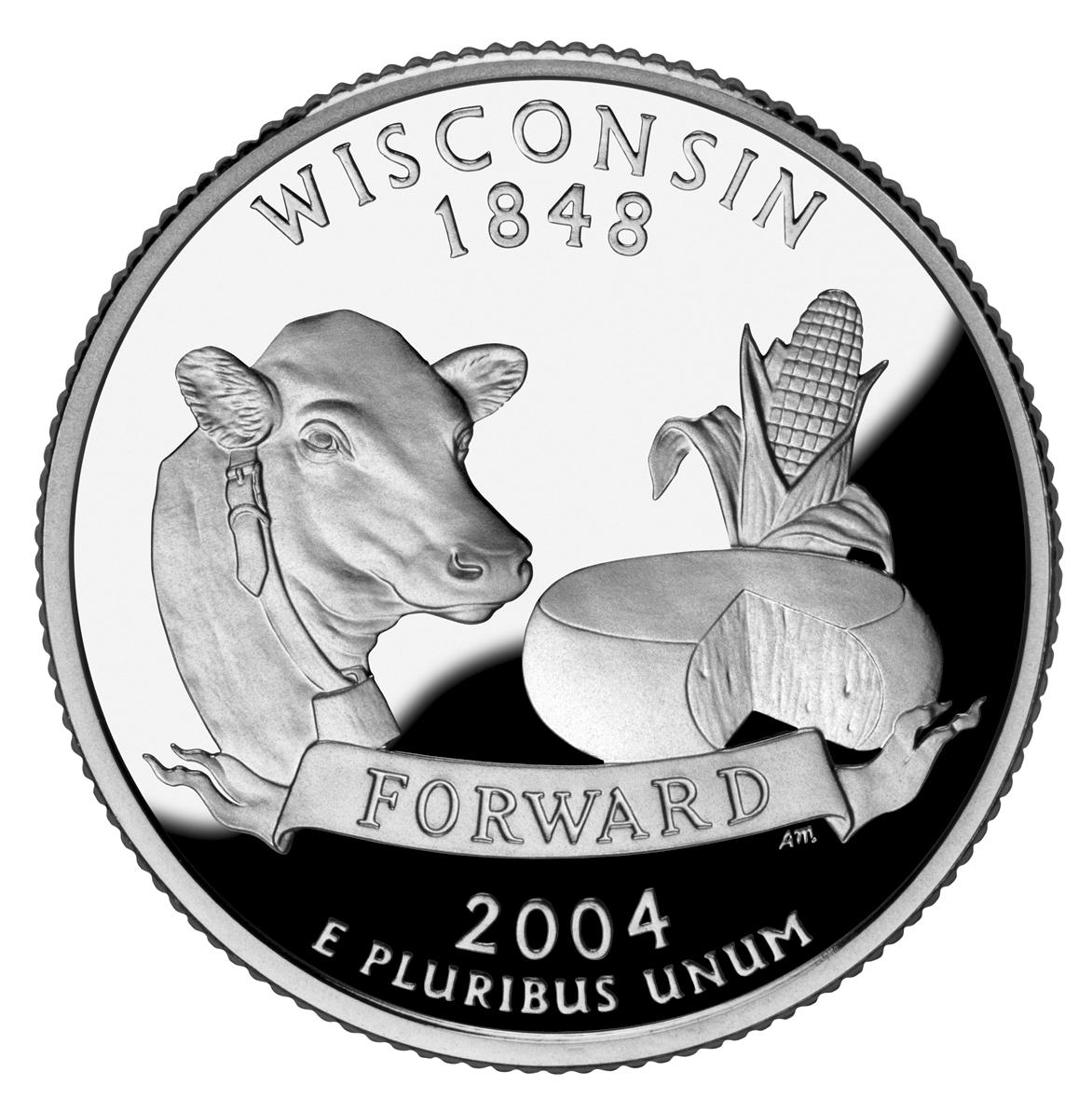
The most famous state quarter error, and one of the few "famous" ones that's actually worth money. A die gouge added what looks like an extra corn leaf — two varieties, High Leaf and Low Leaf. Recent verified sales: raw circulated examples $75–$110; certified MS63–64 around $100–$200; MS65 $160–$275 (an NGC MS65 sold for $273 on eBay in July 2026); MS66 $190–$315 (a PCGS MS66 High Leaf brought $315 the same month, and Stack's Bowers sold an NGC MS66 for $288 in 2025). The famous "$6,000 Wisconsin quarter"? One registry-peak MS67 sale from January 2020. MS67s realized $990–$1,100 in their most recent 2022–2023 auction appearances — a value cliff that applies to a few hundred top-grade coins, not the one in your change.
5. Major off-center strikes — roughly $150
A quarter struck 25% or more off-center, with the design dramatically shifted, is a legitimate error coin. But the "worth $1,000+" figures you'll see are asking prices on unsold listings. Every verified completed sale of a major off-center state quarter we found clustered around $155 — including a certified MS66 at 25% off-center and a raw gem at 40%. Real money for a pocket-change find; not a windfall.
The famous-but-modest tier
These are the errors every YouTube video promises will make you rich. The sold-price record disagrees:
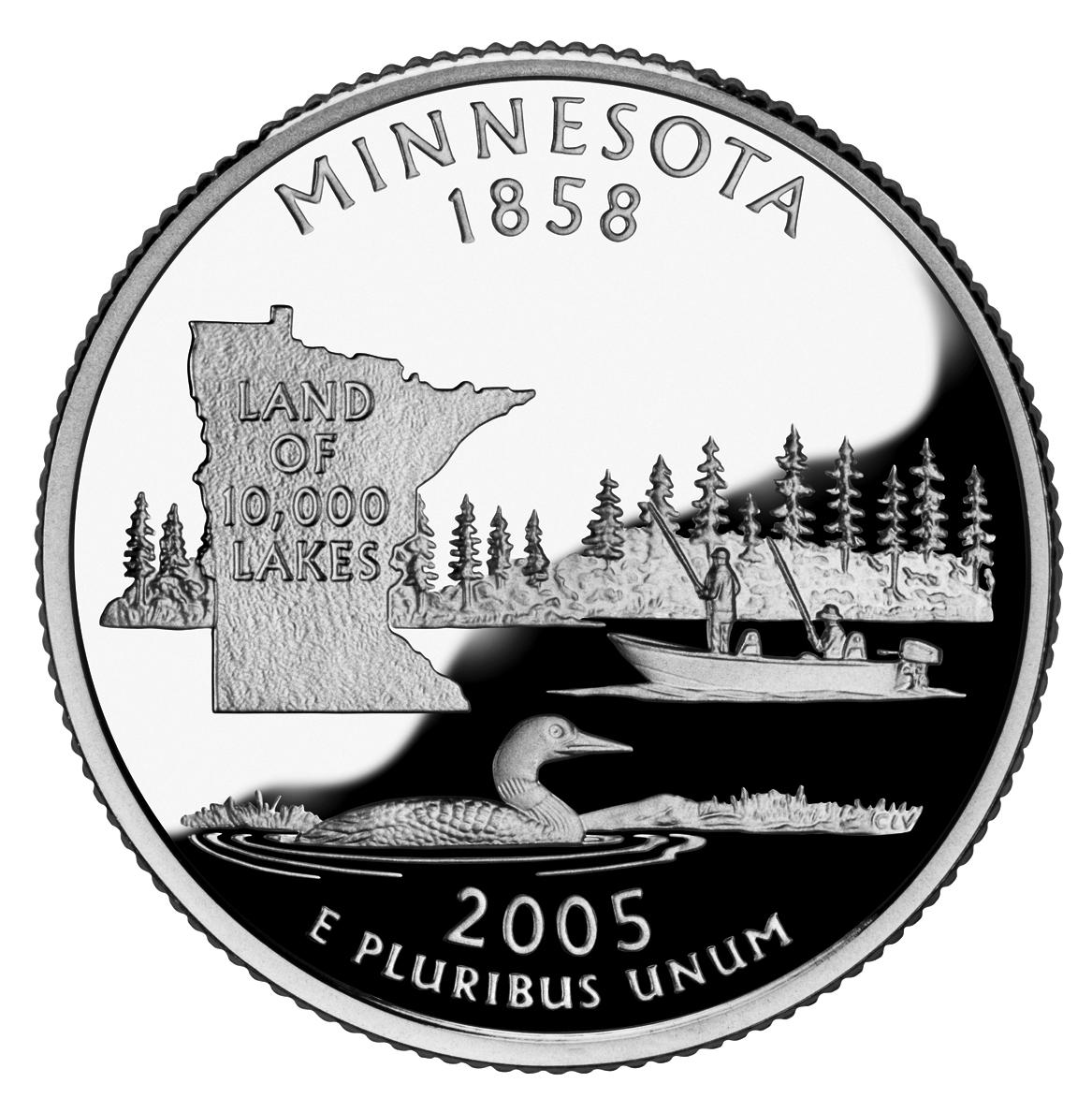
2005-P Minnesota "Extra Tree" doubled dies — dozens of die varieties exist, and attribution matters enormously. Verified sales: raw claimed examples $20–$103, certified MS62–66 mostly $21–$79, and even top-population attributed satin-finish SP68s brought $83–$196 in 2026 — far below the $275–$600 figures that circulate from 2018-era sales. This market has softened, and most "extra trees" people find are minor varieties or machine doubling worth little.
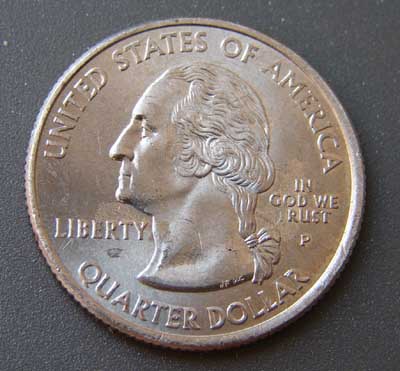
2005-P Kansas "In God We Rust" — a grease-filled die hid the T in TRUST. Fun error, huge search volume, and a verified median sale price of about $9 (range $5–$12, raw). The related "humpback bison" die break brings $2–$5. Blogs claiming $20–$100 are quoting asks, not sales.
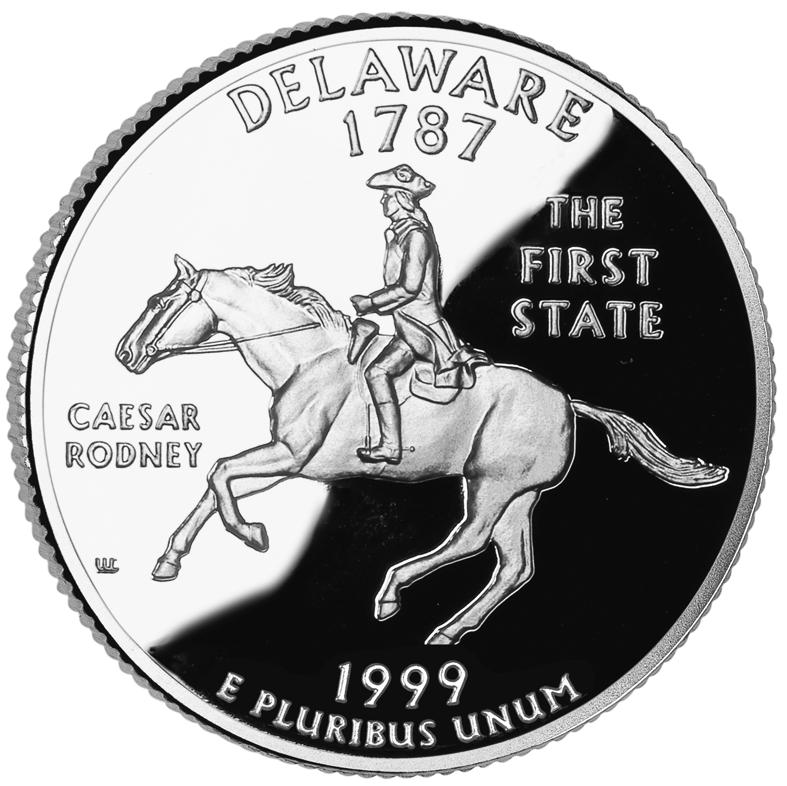
1999-P Delaware "Spitting Horse" — a die crack that looks like Caesar Rodney's horse is spitting. Verified sales: $3–$8. It's the classic example of famous ≠ valuable. Worth pulling from change for fun; not worth grading fees.
The unicorn (so you've heard of it)
The 2000-P Sacagawea dollar/Washington quarter mule — a state-quarter obverse struck with a dollar reverse on a golden dollar planchet — has brought six figures at auction, with fewer than twenty known. Technically it's a dollar-denomination error, and your odds of finding one are lottery-ticket odds. But it's why checking odd-looking quarters costs you nothing and occasionally pays absurdly.
How to check your quarters (two minutes, no tools you don't own)
Weigh it. A normal clad quarter is 5.67 g. Missing clad ≈4.7 g. Wrong planchets weigh whatever the smaller coin weighs (a nickel planchet is 5.0 g, a dime planchet 2.27 g). A kitchen scale that reads tenths of a gram settles most questions instantly. Check the edge. A normal quarter shows a copper stripe in the edge; a coin with full-face copper color AND normal weight is plated or toned, not an error. Know the doubling difference. Machine doubling is flat and shelf-like and adds nothing; true doubled-die doubling is rounded with split details. And as with every coin we write about: never clean anything.
Found something? The look is free.
We check error quarters at no charge at both our Ashland and Grants Pass locations — weight, attribution, and an honest answer about whether yours is the $9 kind or the $500 kind, including whether paying for certification makes sense. Every number in this guide comes from a verified completed sale, because that's the same standard we use when we make you an offer. Call ahead for an appointment.
Frequently Asked Questions
- Is my 2004 Wisconsin Extra Leaf quarter really worth $6,000?
- Almost certainly not. That figure traces to a single registry-quality MS67 that sold at Heritage in January 2020 — a one-off peak. In recent verified sales, raw circulated Extra Leaf quarters bring roughly $75–$110, nice certified Mint State examples $160–$315, and even MS67s realized about $990–$1,100 in their most recent (2022–2023) auction appearances. Still a great find in pocket change — just not a $6,000 one.
- How do I check for a missing clad layer?
- Weigh it. A normal clad quarter weighs 5.67 grams; one missing a clad layer weighs around 4.7 grams and shows a solid copper face on one side. The copper color alone isn't proof — plated novelty coins and environmental toning fool people constantly — but weight plus the copper face is a strong signal. Certified missing-clad state quarters have recently sold for roughly $250–$550.
- My quarter's lettering looks doubled. Is it a doubled die?
- Usually not. Most doubling people find is machine doubling — a flat, shelf-like shift that adds essentially no value. A true doubled die (like the 2005-P Minnesota Extra Tree varieties) shows rounded, split doubling. It's the single most common misattribution we see, which is one reason we look at coins in person for free.
- What's the Kansas 'In God We Rust' quarter worth?
- Around $5–$12 for a raw example based on actual completed sales — the median is about $9. Blogs claiming $20–$100 are quoting asking prices, not sales. It's a fun grease-filled-die error and worth pulling from change, but it isn't a payday.
- Should I pay to get my error quarter graded?
- Only when the verified sale prices clear the grading cost with room to spare — think missing clad layers, strong off-centers, wrong-planchet suspects, and high-grade Wisconsin Extra Leafs. Grading a Spitting Horse or an 'In God We Rust' costs more than the coin brings. Bring it to us first; the look is free, and we'll tell you honestly whether certification makes economic sense.
- Will you look at my state quarters even if they're probably ordinary?
- Yes. That's the point of the free look — most are ordinary, and we'll tell you so in seconds. But missing clad layers, off-centers, and wrong-planchet coins do surface in inherited jars and rolls, and the weight and edge checks take us no time. Call ahead for an appointment at our Ashland or Grants Pass location.
Ready for a real evaluation?
Private appointments. Honest evaluations. Same-day payment.
Related Guides
How to Sell US Coins in Southern Oregon
Most of a typical US coin collection is worth its silver content; a smaller piece is worth a real collector premium. Here's how to tell the difference and why we can't quote it over the phone.
How to Sell Foreign & World Coins in Southern Oregon
Old Mexican pesos, European silver, British sovereigns, modern Libertads — world coins span a huge range. Most are priced on silver or gold content, a smaller subset carries collector premium. Here's how we sort the pile.
Selling a Coin Collection? Know the Grade Before You Take a Price.
Mail-in sites price collections like scrap metal. Auction houses take fees from both sides of your coin. We do something nobody else in this industry does: certify your best coins first and tell you the grade before we talk price.